
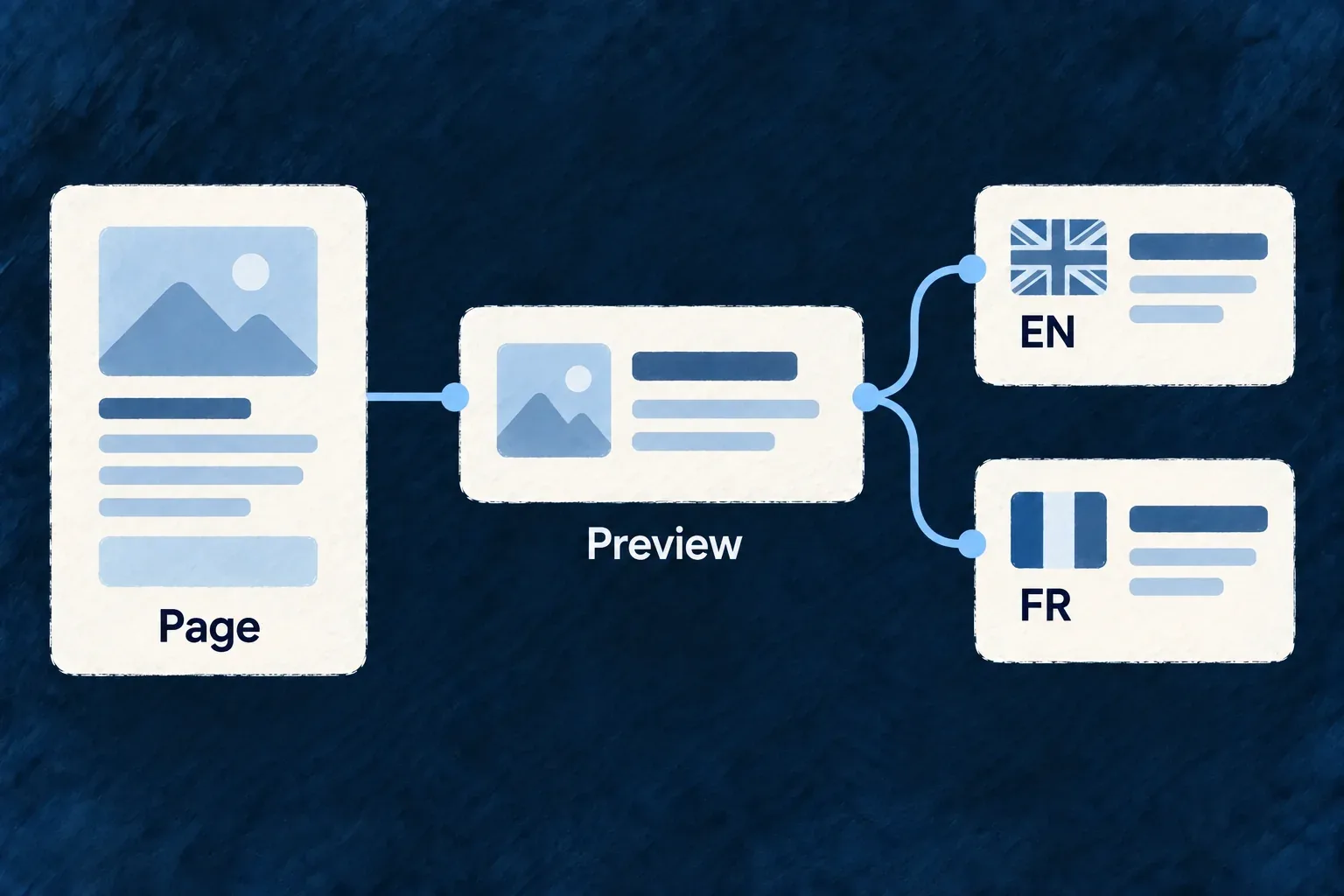
Give every page a consistent public identity
Page titles, descriptions, social previews and language links come from the page’s declared metadata and the site’s shared address. This keeps the public identity of a page connected to its content.
Example — The same pricing page in two languages
English and French pricing pages each show their translated title while pointing to the appropriate canonical address and language alternative.
For engineers
Wonder Todos’ home route loads the language pack and sends it to the head renderer:
const runtime = loadWebsitePageRuntime({
  manifest: LANDING_PAGE_MANIFEST,
  siteContext: WEBSITE_SITE_CONTEXT,
  labelPacksDir: './src/i18n',
  astroLocale: Astro.currentLocale,
});

const headHtml = renderWebsitePageHeadHtml({
  manifest: LANDING_PAGE_MANIFEST,
  siteContext: WEBSITE_SITE_CONTEXT,
  locale: runtime.locale,
  labelPack: runtime.labelPack,
});
Both helpers are exported from @wildo-ai/saas-website/astro. Inject headHtml into the Astro head with <Fragment set:html={headHtml} />. The manifest provides title/description keys; the site configuration supplies the canonical origin and language routing. Missing metadata keys raise instead of emitting blank text.
Check the destinations as well as the tags
The renderer emits absolute canonical and alternate URLs, social metadata, the configured site-wide noindex directive and the page’s AI opt-out directives. Language alternates reflect declared languages; the application must actually provide the corresponding routes. Review title quality, translated wording and social-image availability separately. Tags are publication signals, not evidence that a search engine indexed the page or that every crawler obeys an opt-out.