
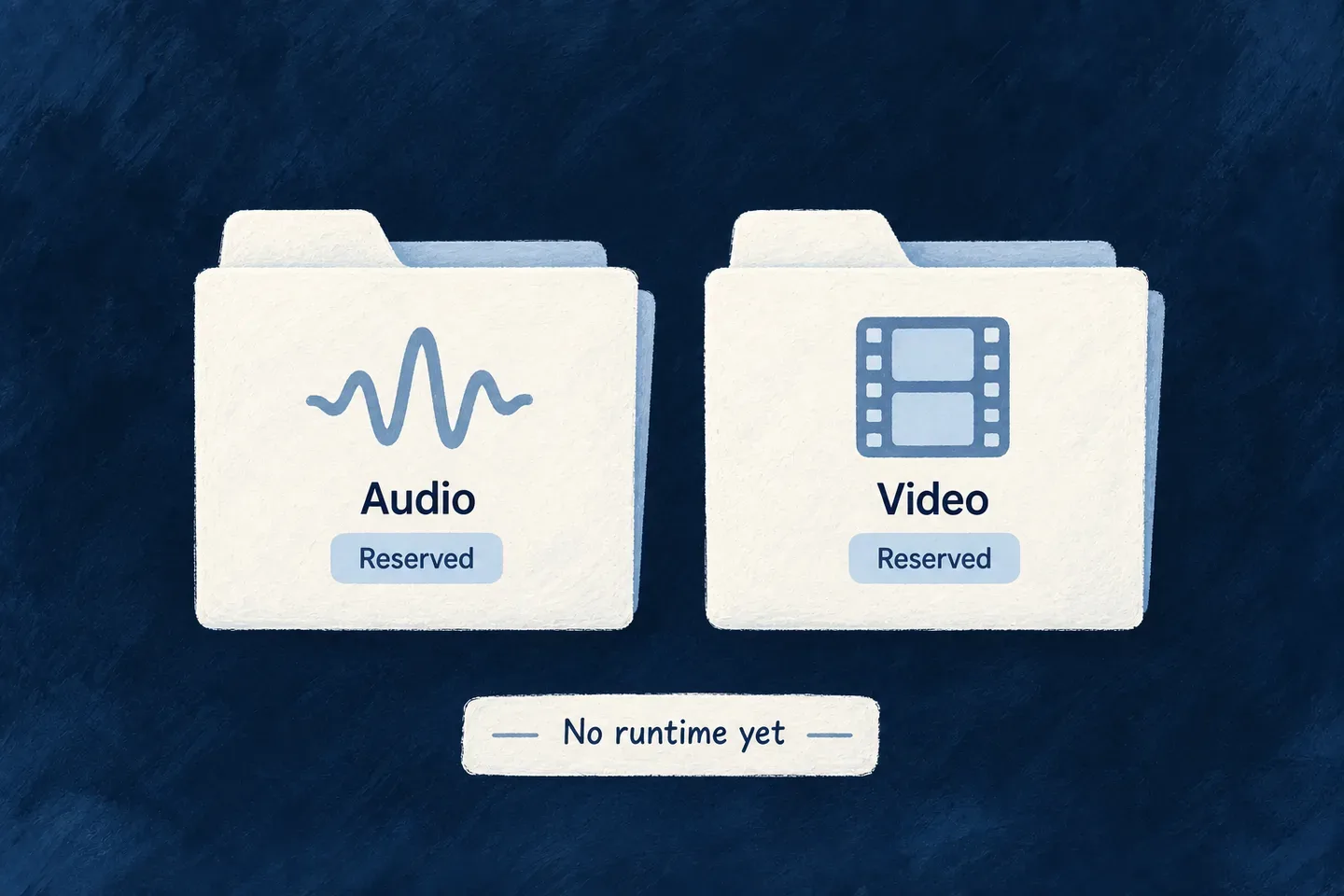
See where audio and video fit
The model distinguishes different kinds of generated output. Audio and video have named places in that vocabulary, preserving a clear path for future implementations.
These names are reserved today; they do not provide executable audio or video generation operations.
Example — Plan an additional media workflow
An application may need narrated or animated content later. The vocabulary can describe the direction, while implementation work still has to supply the provider contract, execution path and application integration.
For engineers
These reserved provider kinds are intentionally absent from executable backend protocol arms. The agent configuration union currently has language-model, image and coding arms.
// Reserved exchange-protocol names; not runnable backend protocols.
AUDIO_PROVIDER = "audio_provider",
VIDEO_PROVIDER = "video_provider",
To add audio or video generation, implement the operation schemas, provider runtime binding, modality-specific agent configuration, dispatch and output handling. Those layers must work together before an application can invoke the new generation operation. The vocabulary drift tests keep reserved protocol names distinct from executable contracts.