
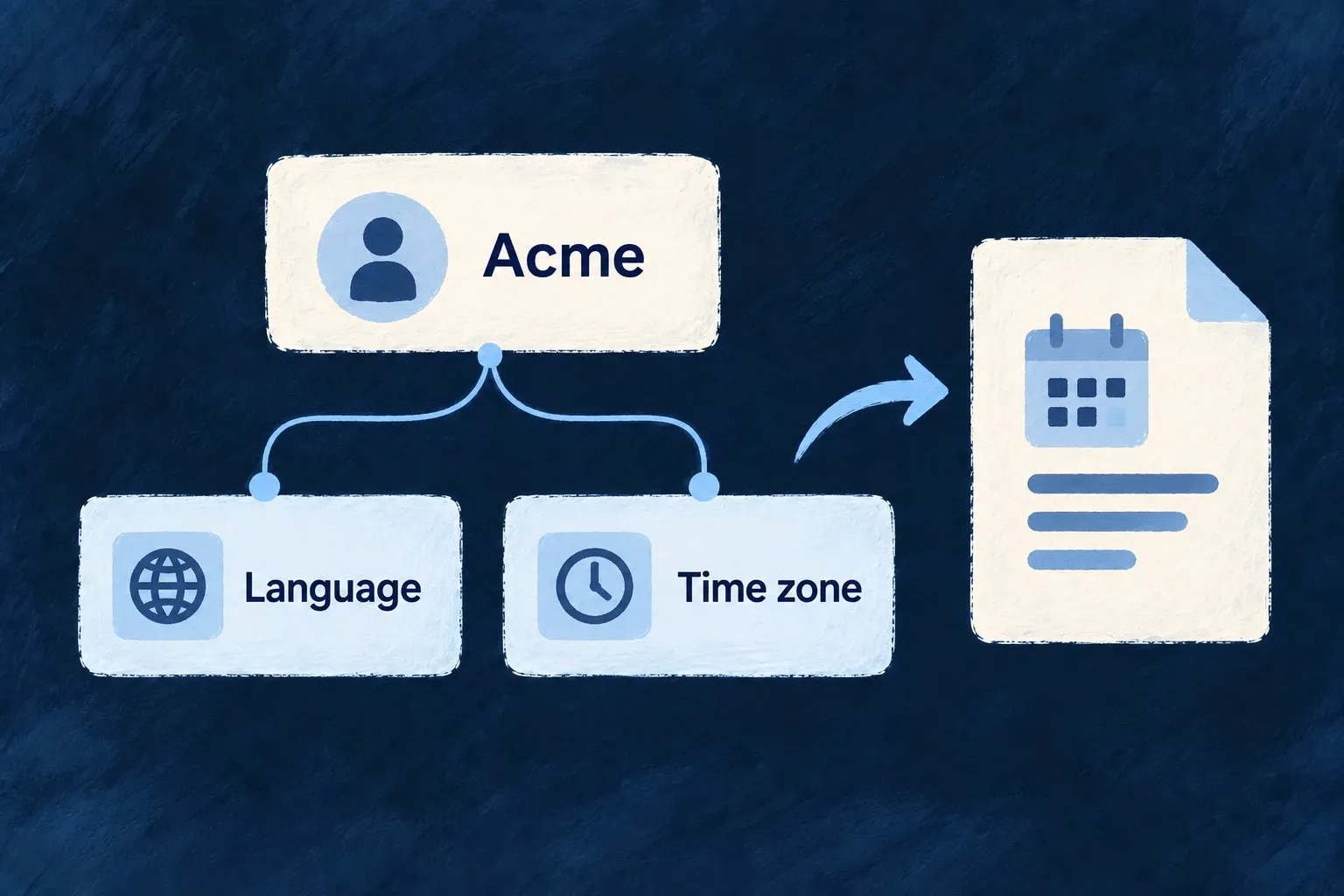
Let each workspace set its defaults
An organisation can establish shared language and formatting defaults. Members start from those conventions and can retain their own regional choices.
Language policy also decides whether members may choose another supported language. Shared defaults and enforced language are separate choices.
Example — Use a shared timezone by default
A workspace sets its timezone and date format. A member who has made no personal choice inherits them; a member’s explicit regional preference continues to take priority.
For engineers
Distinguish language policy from regional defaults
An illustrative organisation-preferences update is:
{
  "timezone": "Europe/Paris",
  "locale": "en",
  "dateFormat": "LOCALE_DEFAULT",
  "timeFormat": "24h",
  "languagePreferences": {
    "primaryLanguage": "en",
    "supportedLanguages": ["en"],
    "allowUserOverride": true,
    "enforceForAllMembers": false
  }
}
Use your generated schema’s actual DateFormat, TimeFormat and AvailableLanguage values when constructing this payload; the named values above describe the intended choices. The resource is seeded with defaults when the organisation is created and edited through its organisation-scoped update operation.
Follow the active organisation into the interface
UserOrgsContext publishes the active organisation’s language and regional preferences. I18nContext stores them separately from the member’s preferences. resolveRegionalFormatting resolves each regional field from member choice, then organisation default, then the framework fallback.
Language resolution additionally respects the application’s organisation-override policy and the tenant’s supported languages. enforceForAllMembers or disabling allowUserOverride can require the tenant’s language; these switches do not turn its regional settings into forced personal values.
Check both inheritance and an explicit choice
Verify a member with no regional values first, then one with an explicit timezone or format. A third useful check switches organisations: defaults should follow the new organisation while the member’s deliberate override remains theirs.