
State who operates the service
A person reading a notice needs to know who runs the service and how to reach them. Wildo gives that information a declared home, alongside the operator’s role for each population of data and its recorded processing purposes.
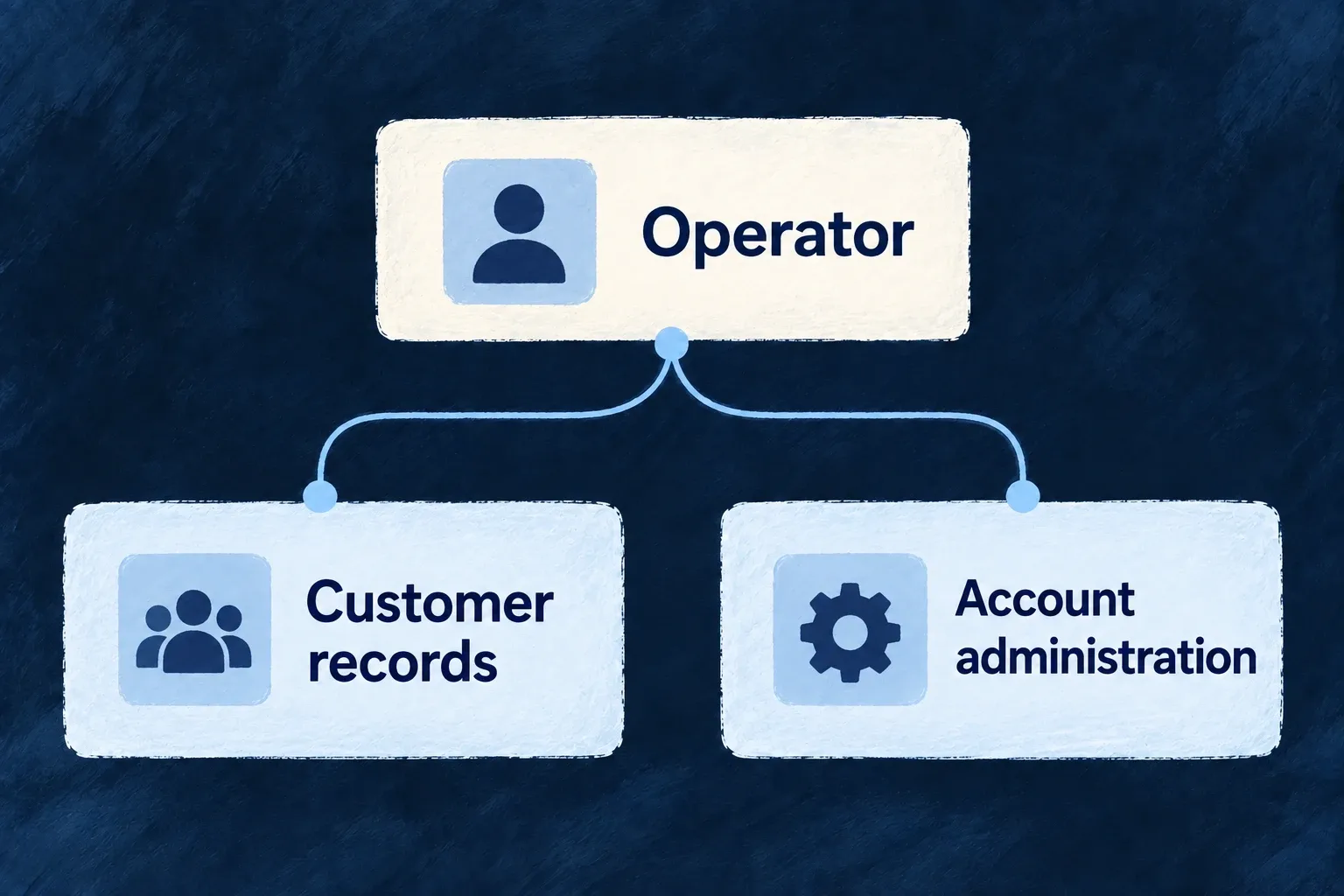
A business application can hold customer records and its own account information under different responsibilities. The declaration keeps those distinctions visible instead of assigning one role to everything.
Example — One product, different responsibilities
A CRM operator records one role for the customer’s contact records and another for its own account administration. The notice can explain each population without combining them into one generic statement.
For engineers
Start with the operator and its data populations
This configuration excerpt comes from the Wonder CRM demonstration application. The identity and role choices are example operator declarations, not defaults or legal advice.
operatorComplianceIdentity: {
  legalEntityName: 'Wonder Software SAS',
  registeredAddress: '1 rue de la Paix, 75002 Paris, France',
  privacyContact: 'privacy@wonder-crm.example',
  roleAllocations: [
    {
      dataScope: 'customer and contact records a subscribing team stores in its workspace',
      role: OperatorProcessingRole.PROCESSOR,
    },
    {
      dataScope: 'account, authentication and billing data of the team members who administer and use the workspace',
      role: OperatorProcessingRole.CONTROLLER,
    },
  ],
Import the named role vocabulary from @wildo-ai/saas-models; place the declaration under operatorComplianceIdentity in wildo.saas.config.ts. Lawful bases are recorded per purpose in the sibling lawfulBases array, with an assessment note required by the schema for a declared legitimate-interests basis.
Keep service consent separate
serviceConsentRequirement describes an explicit consent gate and what it governs. It is separate from analytics preferences and from the purpose-specific lawful-basis declaration. Declaring NONE is an answer; omission is not a claim that no gate exists. The identity schema permits independent parts to be recorded as they become established while rejecting an empty declaration.
Use the declaration in reviewable documents
The companion composes these values into document-authoring context. outstandingOperatorComplianceIdentityParts identifies which identity fields remain unanswered. The declaration supplies the operator’s stated facts and choices; it does not change request authorization, enact the processing policy or validate a legal conclusion. Product behavior and the published account of it must be reviewed together.