
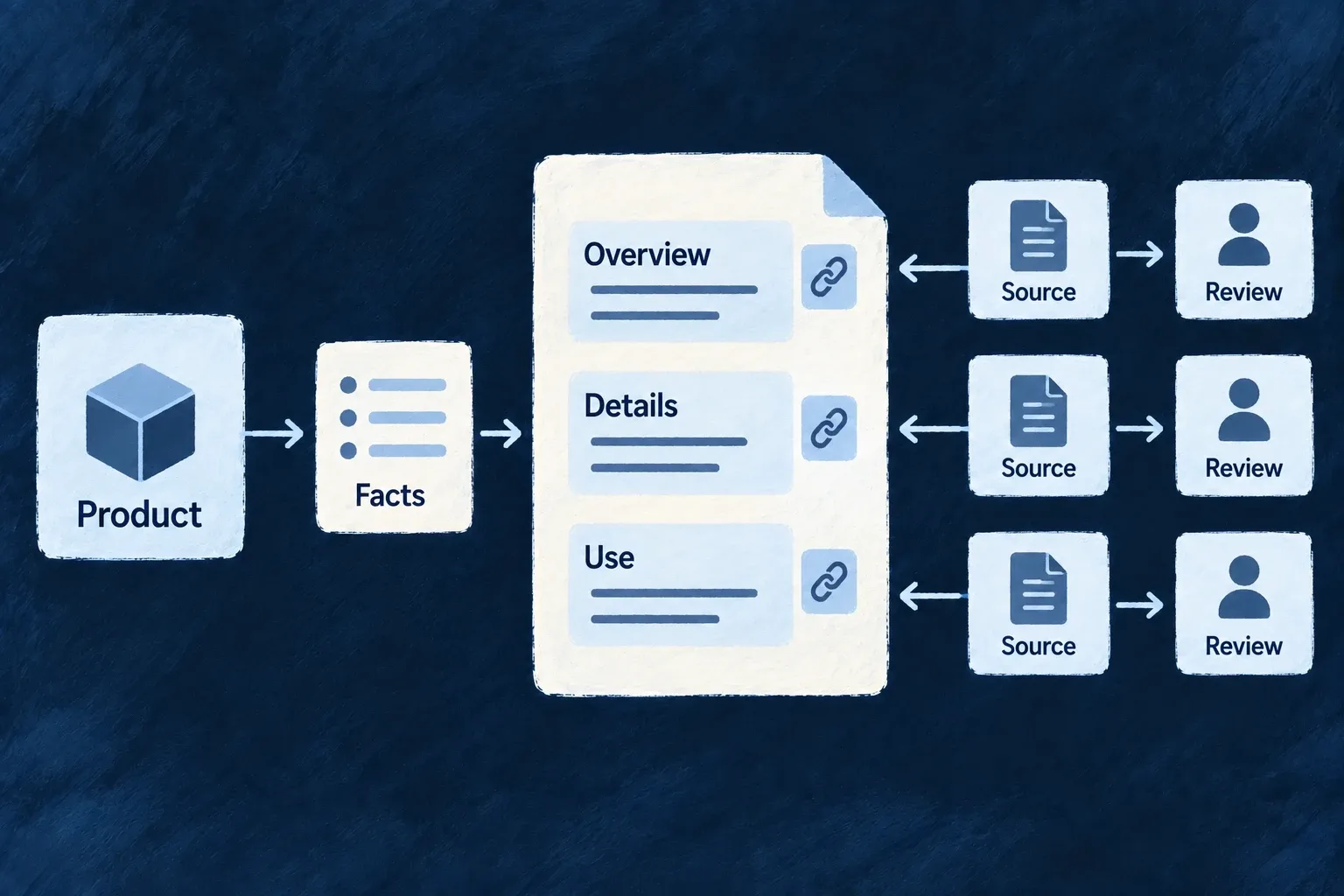
Write documents that describe the product
A notice should explain the service people are using. Wildo organizes governed documents around the product’s facts and the concerns the document needs to address, rather than treating a plausible draft as a finished result.
Sections and clauses remain readable content with traceable sources. This gives reviewers a way to assess both what the document says and whether it covers the questions it is meant to answer.
Example — Update a notice when the product changes
An application adds a new category of personal data. The fact layer records the declaration, and the notice can cite it in the relevant section. Review can check the changed statement and the surrounding coverage together.
For engineers
Keep structure and source references together
A ComplianceDocumentCandidate names its document and jurisdictions, then contains ordered sections and clauses. Sections identify the concern they address and may declare which blueprint sections they satisfy. Clauses carry prose, fact references, claim guards and completeness. These are the actual document-level fields of the Wonder CRM candidate:
export const applicationComplianceDocumentCandidate: ComplianceDocumentCandidate = {
  "version": ComplianceDocumentCandidateVersion.V1,
  "documentRef": "document:public.privacy-notice",
  "title": "Wonder CRM Privacy Notice Candidate",
  "jurisdictionRefs": [
    "jurisdiction:eu",
    "jurisdiction:gb"
  ],
  "variantSelections": [],
  "sections": [
    {
      "sectionRef": "section:operator-identity",
      "order": 1,
      "title": "Operator identity and privacy contact",
      "concernRef": "operator-identity",
      "satisfiesSectionRefs": [
        "document-section:scope-and-audience",
        "document-section:identity-and-role",
        "document-section:contact"
      ],
The candidate’s own section identity can stay readable while satisfiesSectionRefs links it to required coverage. A corresponding satisfiesClauseRefs field supports clause-level requirements without forcing the writer to copy the blueprint’s structure word for word.
Check coverage as well as valid citations
A document can cite only valid facts and still omit an important subject. validateComplianceDocumentCandidateFactBinding checks its references; fact/blueprint coverage and the required-document set answer different questions. The completeness projection reports concerns that are established, unresolved or unaddressed. Keep those checks separate so internal consistency cannot masquerade as complete coverage.
Carry unresolved statements honestly through review
The content schema distinguishes derived statements from information needing framework support, configuration or an operator decision. Where an unresolved statement names awaitingFactRefs, its arrival can be detected as a stale absence claim. This supports iterative document preparation without silently inventing an answer.
The destination is a document derived from product facts and reviewed decisions, with production evidence supporting claims about operation. The drafting process prepares content. The operator’s release process decides what may be published; qualified review addresses legal interpretation and external assessment retains its own authority.