
Publish guides as a navigable documentation site
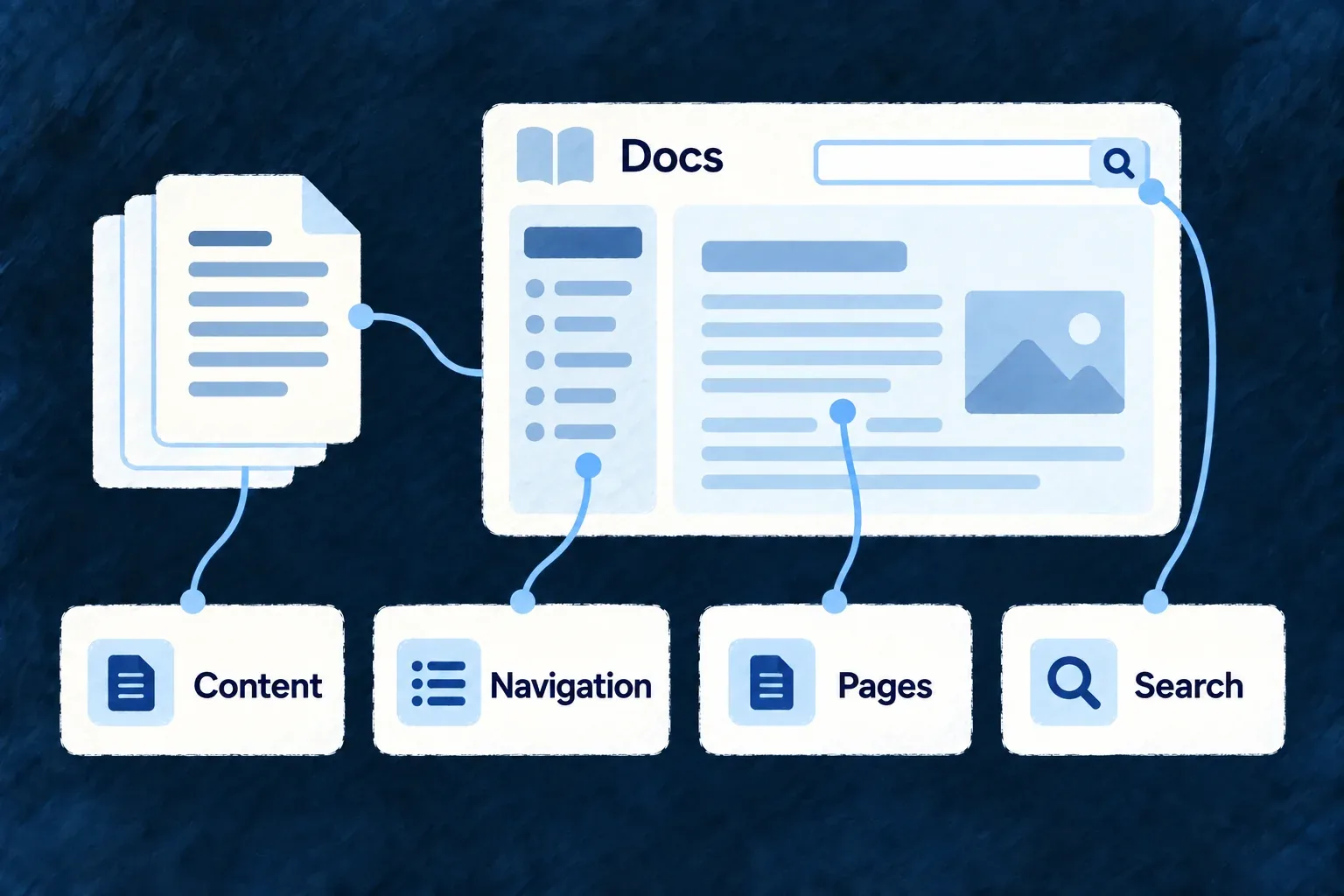
Turn the accepted documentation bundle into pages, navigation and search data that belong together. Managed output checks catch missing destinations and malformed artifacts before the portal consumes them.
Example — A guide appears in the right reading journey
A newly included guide has its page, category and related navigation produced together. A removed guide does not leave a sidebar link pointing nowhere.
For engineers
The companion exposes separate preparation and publication operations. These are route names under its /api/companion base, not commands to send to the application’s customer API:
POST /api/companion/technical-doc/generate-openapi
POST /api/companion/technical-doc/publish-openapi
POST /api/companion/technical-doc/derive-bundles
POST /api/companion/technical-doc/publish-managed
Use the application’s companion tooling and its required request/access contract. OpenAPI publication establishes the reference targets used by guide links. Managed publication renders the accepted content, assets and navigation into the application-owned generated tree.
Inspect the outputs as one set
The Docusaurus renderer creates pages, directory labels and journey sidebars. Markdown escaping preserves code-like prose in MDX; unresolved required reference targets fail rather than produce plausible-looking links. A shared search index describes the published pages.
The managed-tree validator enforces output budgets, public-content sentinels and link integrity. The site consumer requires its output manifest, document tree and sidebar. Keep generated files together during review and deployment; editing an emitted page by hand competes with the next publication. Generation success is artifact evidence, while a rendered browser page is a separate acceptance check.