
Ask for the decisions only you can make
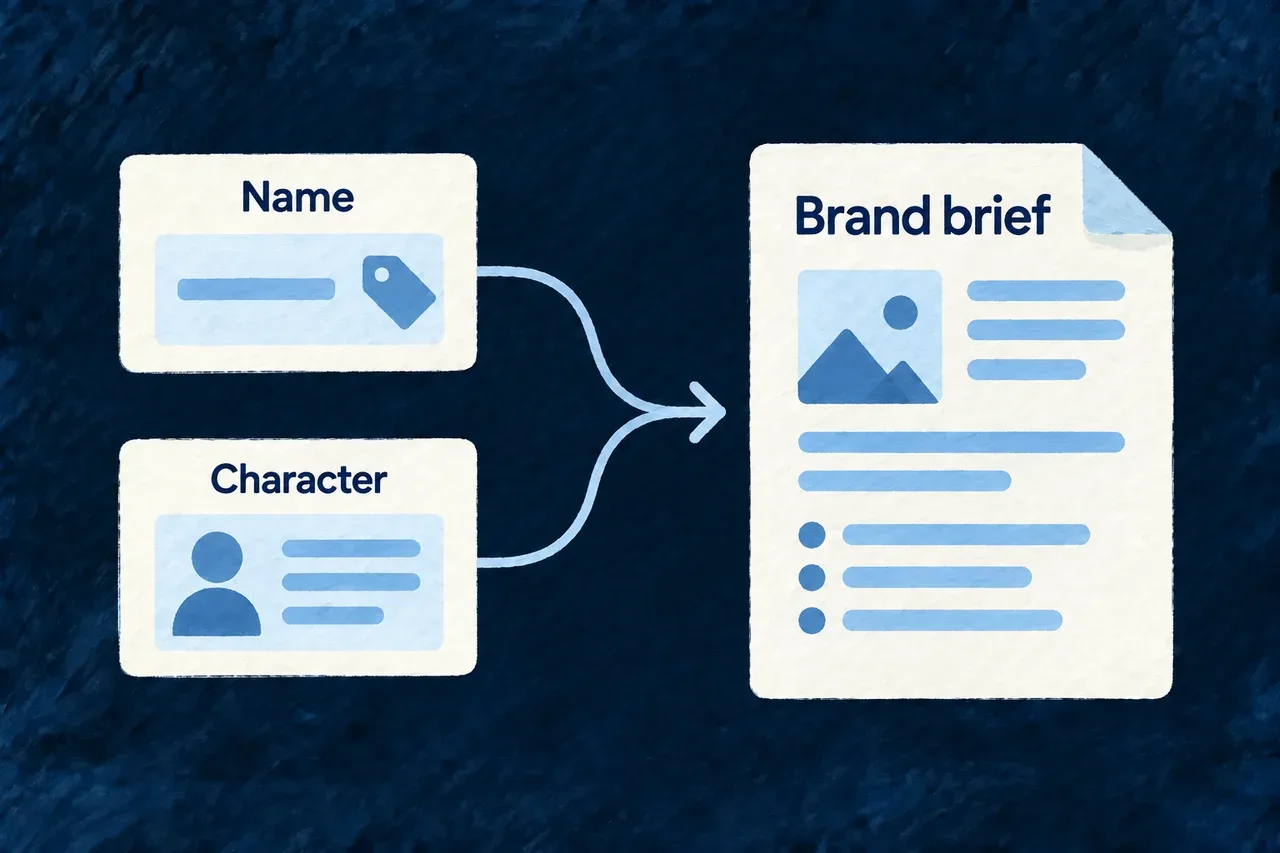
Some decisions belong to the person shaping the product: its name, its intended identity or a constraint the project has not recorded. A creation method can declare those questions and use the answers in its brief.
The questions travel with the method. Wildo checks that the answers match what was asked, so a missing answer or an unsupported choice cannot quietly become an agreed product decision.
Example — Give a brand its intended character
Before preparing the brand brief, the method asks for the exact name, the desired kind of mark and imagery to avoid. Those answers guide the work alongside the existing product direction.
For engineers
Declare questions with stable references
This excerpt comes from the brand method’s declared interview. It shows a free-text answer and a choice whose values are explicit:
{
  "questions": [
    {
      "ref": "brand-name",
      "question": "What is the exact, case-sensitive brand name the logo should render?",
      "kind": "free_text"
    },
    {
      "ref": "brand-tagline",
      "question": "Is there a tagline? Answer none if not.",
      "kind": "free_text"
    },
    {
      "ref": "logo-mark-type",
      "question": "Which logo archetype fits the brand?",
      "kind": "choice",
      "options": ["combination_mark", "wordmark", "lettermark", "pictorial_mark", "abstract_mark", "emblem", "mascot"]
    }
  ]
}
Question wording is shortened here for readability; the actual method declares the full interview in method.elicitation. A host must submit answers for the complete declared question set, using questionRef and answer, not only this excerpt.
Validate the answer before composing the brief
composeElicitationSection matches each answer to its question, rejects duplicate or unknown references, trims text and refuses empty answers. It then requires every declared question to have an answer.
| Question kind | Answer contract |
|---|---|
| Free text | Nonempty authored text |
| Choice | One of the declared option values |
| Confirm | An unambiguous yes or no, normalized to the canonical answer |
Nuance belongs in an accompanying free-text answer. An ambiguous confirmation is refused rather than interpreted as consent or a product fact.
Carry the answer into the work
The companion composes the validated interview into the method brief. Composite work passes the parent’s rendered answers into its child context, so related methods can reason from the same supplied decisions.
Declare a question when the answer genuinely requires the creator. Existing specifications and gathered evidence should supply facts already available to the method. Compliance posture, for example, derives from evidence and adequacy work rather than a fixed questionnaire asking the creator to reconstruct obligations.
An upfront interview establishes known inputs. The clarification channel handles a consequential question discovered during generation preparation.