
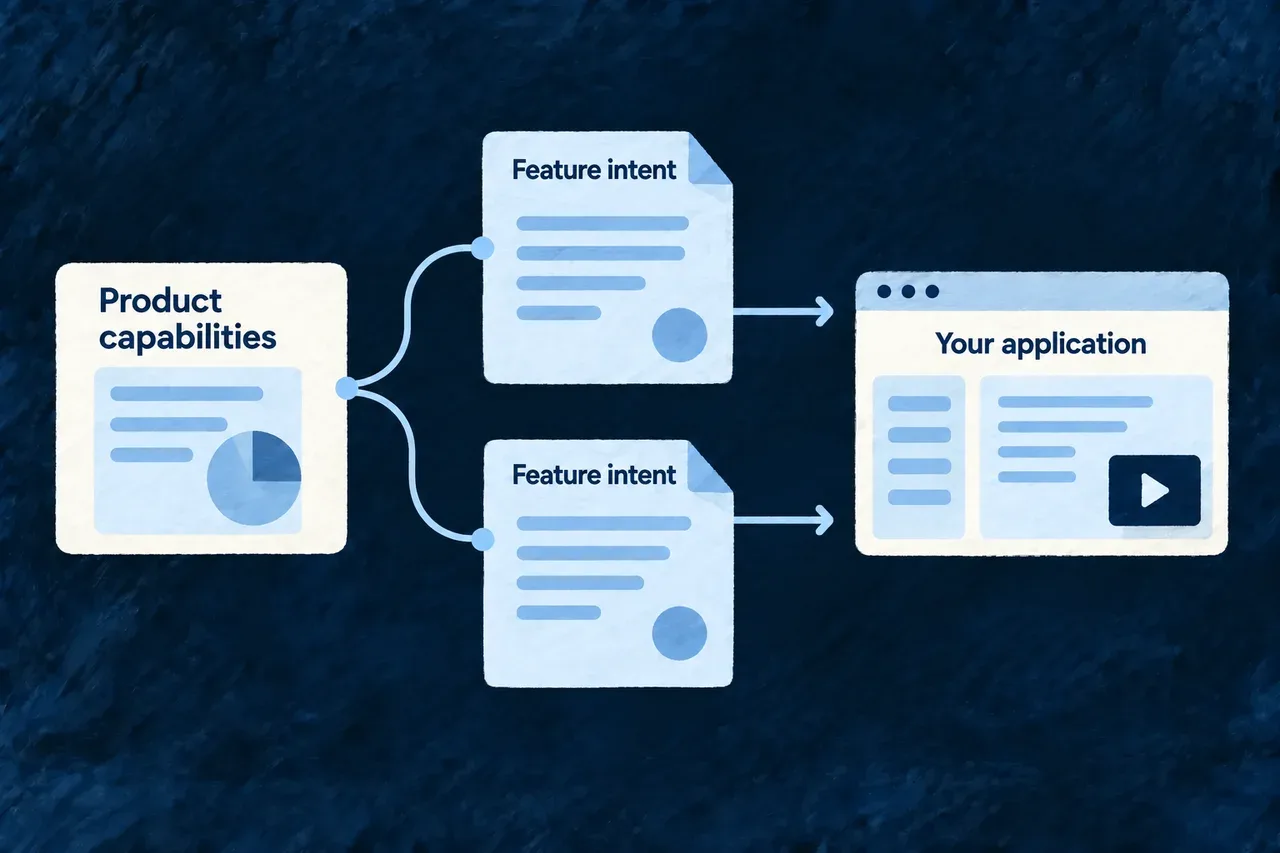
Connect each feature to the value it brings
A list of feature names says little about why the product needs them. A useful feature definition explains its purpose, when it helps and where it does not fit.
Feature drafts capture that intent before runtime implementation dominates the discussion. The capability map connects those drafts to the benefits recorded in the market model.
Example — Define ownership before building its controls
The team describes why a deal needs an owner, who uses that feature and which situations need a different workflow. The market benefit refers to that intended feature by its stable identity.
For engineers
Write the intended behavior
This illustrative draft describes an intended feature without creating its runtime definition:
import type { FeatureSpecificationDrafts } from '@wildo-ai/saas-specifications';

export const applicationFeatureSpecificationDrafts: FeatureSpecificationDrafts = {
  schemaVersion: 1,
  drafts: [{
    featureRef: 'feature-deal-owner',
    draft: {
      purpose: 'Make responsibility for each open deal explicit.',
      businessRole: 'Supports the promise of dependable customer follow-up.',
      lifecycleRole: 'Used while the team manages active opportunities.',
      useWhen: 'A deal needs one teammate responsible for moving it forward.',
      avoidWhen: 'The problem requires complex approval chains or territory routing.',
      businessConstraints: ['The owner remains visible in the shared workspace.'],
      availabilityRole: 'Available to members managing customer work.',
    },
  }],
};
featureRef identifies the draft for references such as a benefit’s deliveredByFeatureRefs. The nested draft explains purpose, usage and constraints. Availability prose describes intent; application configuration and authorization implement access.
Validate the connected proposal
The capability-map output combines an updated market snapshot and feature drafts. Its validation considers existing feature references together with the proposed draft references, then checks each half of that output set. This lets the proposed benefit-to-feature links be checked together.
| Part | What it adds |
|---|---|
| Market benefit | The improvement expected for a customer |
| Feature identity | The stable target of that benefit’s reference |
| Feature draft | The purpose, useful context and boundaries of the feature |
| Later implementation | The definitions, operations and screens that provide it |
Inspect the proposed market and draft artifacts together with their validation report, so the benefit links and feature intent remain aligned.
Carry the draft into implementation
Register the drafts through featureDraftsSpecification and keep their identities aligned with the later feature definitions. Validation checks the draft’s structure and identities. Review establishes whether it expresses the intended product; implementation and verification establish whether the application delivers that value.