
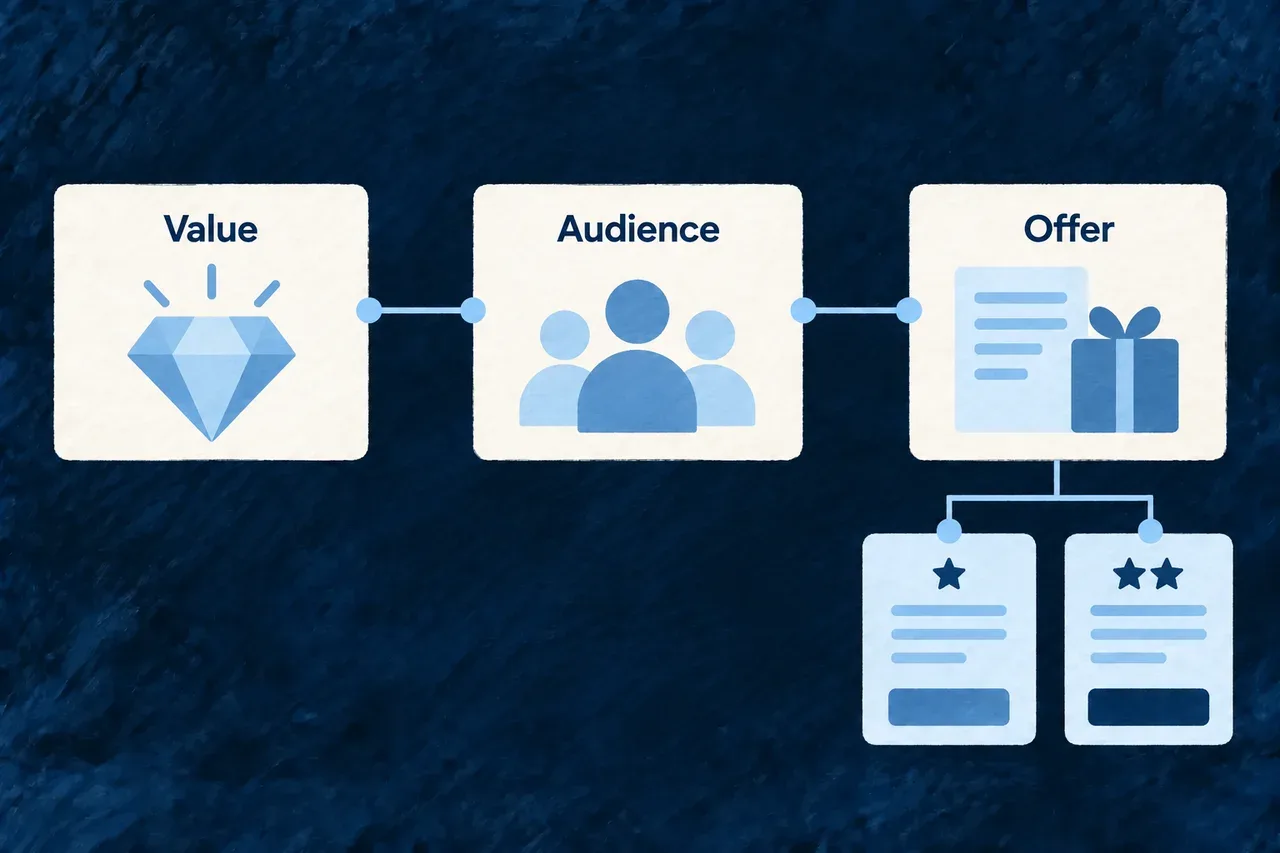
Explain what customers pay for
An offer should make sense beside the product it funds. Its audience, included work and pricing approach need to agree with the requirements the team plans to deliver.
The business model records those choices explicitly. It connects each offer to customer profiles and requirements so pricing intent is part of the product definition.
Example — Define a team offer
A team plan includes shared customer records and assigned follow-up. The product owner records who it serves and the requirements it includes, while leaving the final price as an explicit decision.
For engineers
Record the product owner’s choices
This illustrative business model deliberately leaves the price unconfirmed:
import { BusinessModelLiteSnapshotVersion, PricingModelAxis, RevenueModelKind, type BusinessModelLiteSnapshot } from '@wildo-ai/saas-specifications';

export const applicationBusinessModelLiteSnapshot: BusinessModelLiteSnapshot = {
  version: BusinessModelLiteSnapshotVersion.V1,
  revenueModel: RevenueModelKind.SUBSCRIPTION,
  plans: [{
    ref: 'pricing-plan-team',
    name: 'Team',
    pricePoint: 'Price to be confirmed with the product owner',
    billingPeriod: 'monthly',
    pricingModel: PricingModelAxis.PER_SEAT,
    includes: 'Shared customer records and assigned follow-up.',
    targetSummary: 'Small teams coordinating customer work.',
    targetIcpRefs: ['icp-small-team'],
    includesRequirementRefs: ['functional-requirement-owned-follow-up'],
  }],
};
revenueModel describes the overall approach. A plan’s pricingModel describes its charging axis. pricePoint is authored product text; it is not a provider price identifier or a typed money amount.
Keep the offer connected to scope
| Declaration | Meaning |
|---|---|
| Target profiles | The customers the offer is designed for |
| Included requirement references | The product commitments included in that offer |
| Billing period and pricing model | The intended commercial structure |
| Price point | The owner’s recorded pricing decision or pending choice |
The business-model method consumes market and requirements context. Register the result through businessModelLiteSpecification for the companion. Coherence can relate its references to the available product families.
Implement the commercial behavior separately
The application’s billing catalogue, entitlements and access policies implement the offer. Changing this snapshot does not create provider prices or enforce feature access. Review those runtime configurations alongside a changed offer and test the customer journey they produce.