
Give the product a recognizable identity
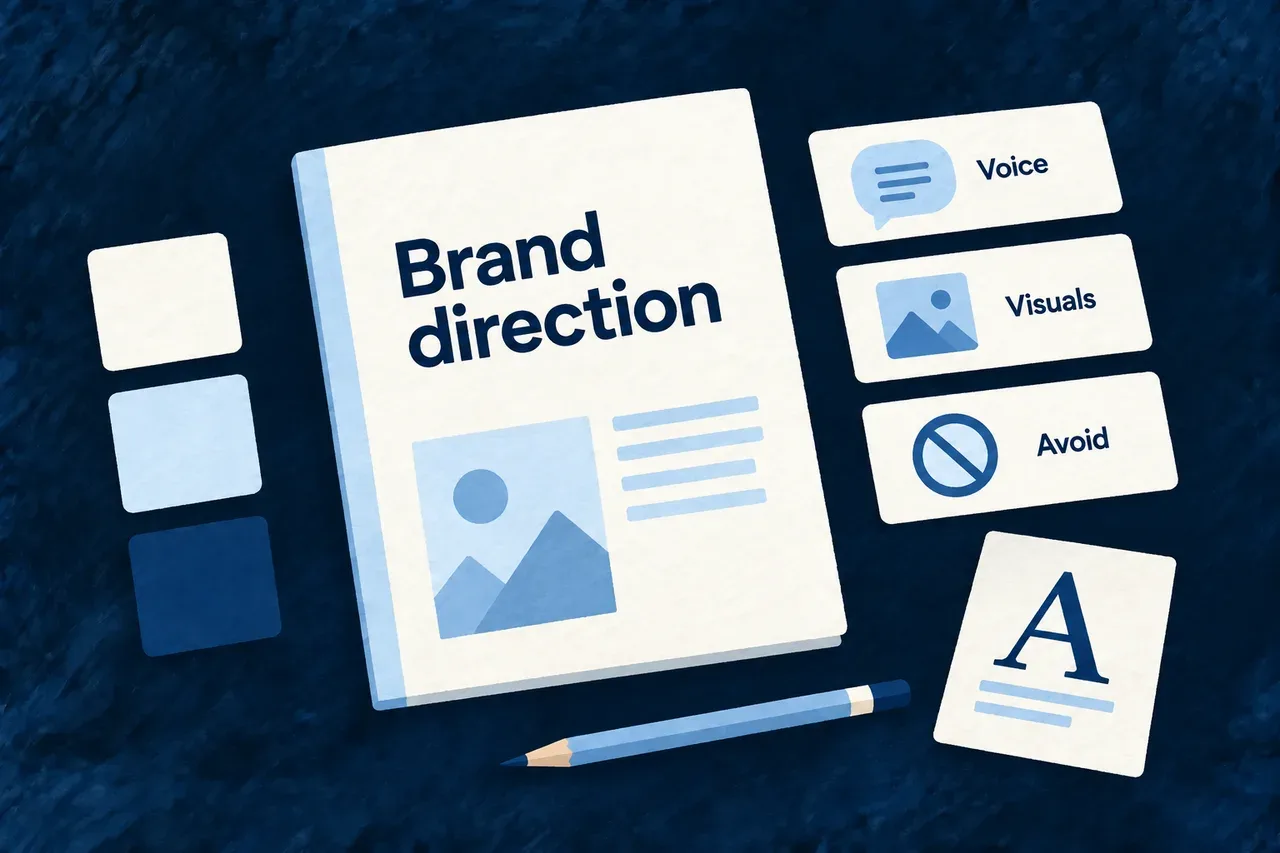
A recognizable identity comes from consistent choices: the name, tone, visual direction and the things the brand should avoid.
The brand brief records those choices before asset production. Resolved assets can then remain attached to the brief that explains what they should communicate.
Example — Choose a calm visual direction
A team wants a precise, understated identity. It describes the desired feeling and rules out glossy effects and literal robot imagery before reviewing proposed artwork.
For engineers
Write a usable brief
This illustrative brand declaration supplies concrete direction while leaving asset selection open:
import { BrandSnapshotVersion, BrandLogoMarkType, BrandLogoBackgroundTreatment, type BrandSnapshot } from '@wildo-ai/saas-specifications';

export const applicationBrandSnapshot: BrandSnapshot = {
  version: BrandSnapshotVersion.V1,
  name: { brandName: 'Northstar', tagline: 'Keep the next step clear.' },
  logoDirection: {
    markType: BrandLogoMarkType.ABSTRACT_MARK,
    motifs: ['a clear forward direction'],
    symbolism: ['clarity', 'shared momentum'],
    avoid: ['literal robots', 'glossy effects', 'text inside the symbol'],
    backgroundTreatment: BrandLogoBackgroundTreatment.TRANSPARENT_ISOLATED,
  },
  visualTone: {
    styleKeywords: ['calm', 'editorial', 'precise'],
    mood: 'Confident without visual noise.',
    colorIntent: 'Restrained blue with generous neutral space.',
    colorSeeds: [],
  },
  resolvedAssets: [],
};
The name and tagline identify the product. logoDirection guides the kind of mark and its visual constraints. visualTone gives a concise creative direction. resolvedAssets carries selected asset information when available.
Follow the brief to its consumer
The logo-generation service consumes the authored brand brief and can include market voice context. A generated proposal still needs review for the intended purpose and theme. Asset records distinguish details such as composition, purpose and format; keep the accepted files and their recorded roles aligned.
| Choice | Where it belongs |
|---|---|
| What the identity should evoke | Brand brief |
| What the artwork should avoid | Logo direction |
| Which files were selected | Resolved assets |
| Actual interface colors and typography | Application design configuration |
colorIntent is creative guidance, not a CSS theme. Register the brief through brandSpecification so the generation tools can read it.
Put accepted assets on their destinations
Generation and acceptance put the selected assets in the brand source of truth. Propagation copies them to the configured destinations and updates the runtime asset configuration. Run these commands from the application root after accepting the assets:
# Inspect the destination plan without writing files.
wildo brand propagate --dry-run

# Copy accepted assets to their configured consumers.
wildo brand propagate
Inspect the served asset URLs and the application surfaces after propagation. wildo config sync does not replace this step. See derived brand assets for how the accepted source supplies the different visual roles.