
Give reviewers your product’s standards
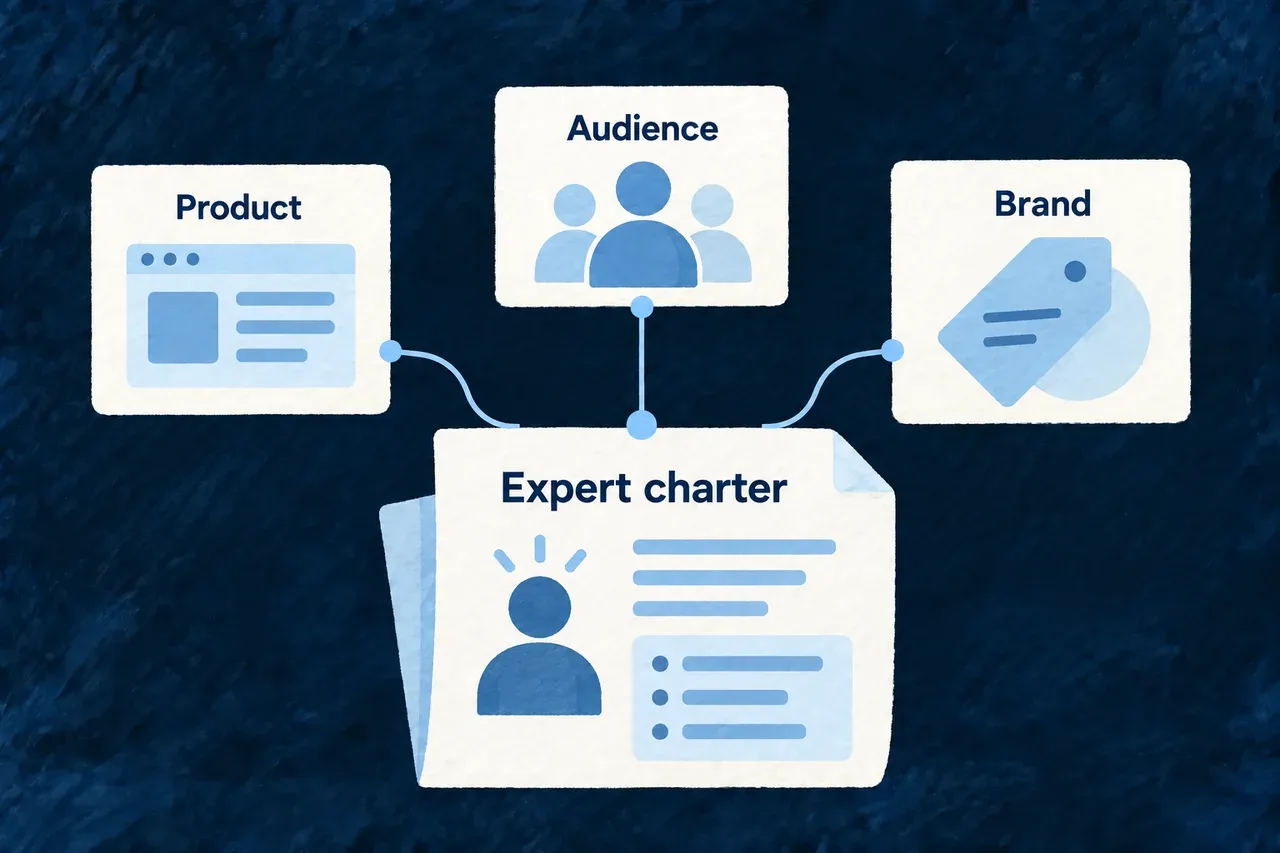
A review should reflect the product being built. Wildo combines a professional role with the application’s own direction, audience and design choices to propose an expert charter.
The charter makes that expert’s priorities and avoidances explicit. Your team can read and refine the standards instead of leaving them buried in a changing prompt.
Example — Review a mark for its real use
An art director for a task application can prioritize recognition in a crowded browser tab and readability at favicon size. Those standards make the discussion more useful than a general preference for an attractive image.
For engineers
The framework role template declares the profession’s responsibilities, shaping inputs and permitted review domains. The application charter supplies its specific persona prose, ordered priorities, taboos and optional review procedure.
These fields come directly from ExpertPersonaCharterSchema:
  priorities: z.array(NonEmptyStringSchema).min(1),
  taboos: z.array(NonEmptyStringSchema).default([]),
  qualityBar: z.array(NonEmptyStringSchema).optional(),
  reviewProtocol: z.array(NonEmptyStringSchema).optional(),
priorities guide what matters most; qualityBar describes what strong work looks like; reviewProtocol describes how to examine it. They have different jobs. A long persona description is not a substitute for concrete criteria.
Derive, review and promote
The companion’s derivation service loads the required shaping artifacts and refuses missing inputs. It stages a proposed charter under .wildo-saas/generated/expert-personas/, with a quality report. The accept operation validates the resulting charter set before writing the application persona module and regenerating its aggregator.
| Stage | What to inspect |
|---|---|
| Shaping inputs | Product direction, market and relevant brand or design information |
| Proposed charter | Priorities, taboos and the standard of evidence the reviewer requests |
| Accepted source | Application-owned persona module and companion-export wiring |
| Hand edit | Add authored metadata to protect deliberate changes from replacement |
The accept guard checks both loaded charters and the on-disk source for human-edit metadata. Accept promotes a proposal into source files; it does not create a Git commit.
Make the expert available to a panel
The companion builds expert agents from accepted charters at startup. After accepting a new role, restart the companion through the normal development workflow before selecting it in a panel. A missing role is reported rather than silently replaced with a generic reviewer.
Wonder Todos contains an actual art-director charter with explicit favicon, palette and visual-restraint priorities. Its decisions belong to that application, not every Wildo product. Freshness is assessed through source history and derivedAt; charters do not carry an input digest or automatic freshness seal.