
Give your agent a method for the whole change
Adding a field can affect more than its declaration. Validation, screens, labels and database changes may need to follow it. An agent needs a method for finding those connections.
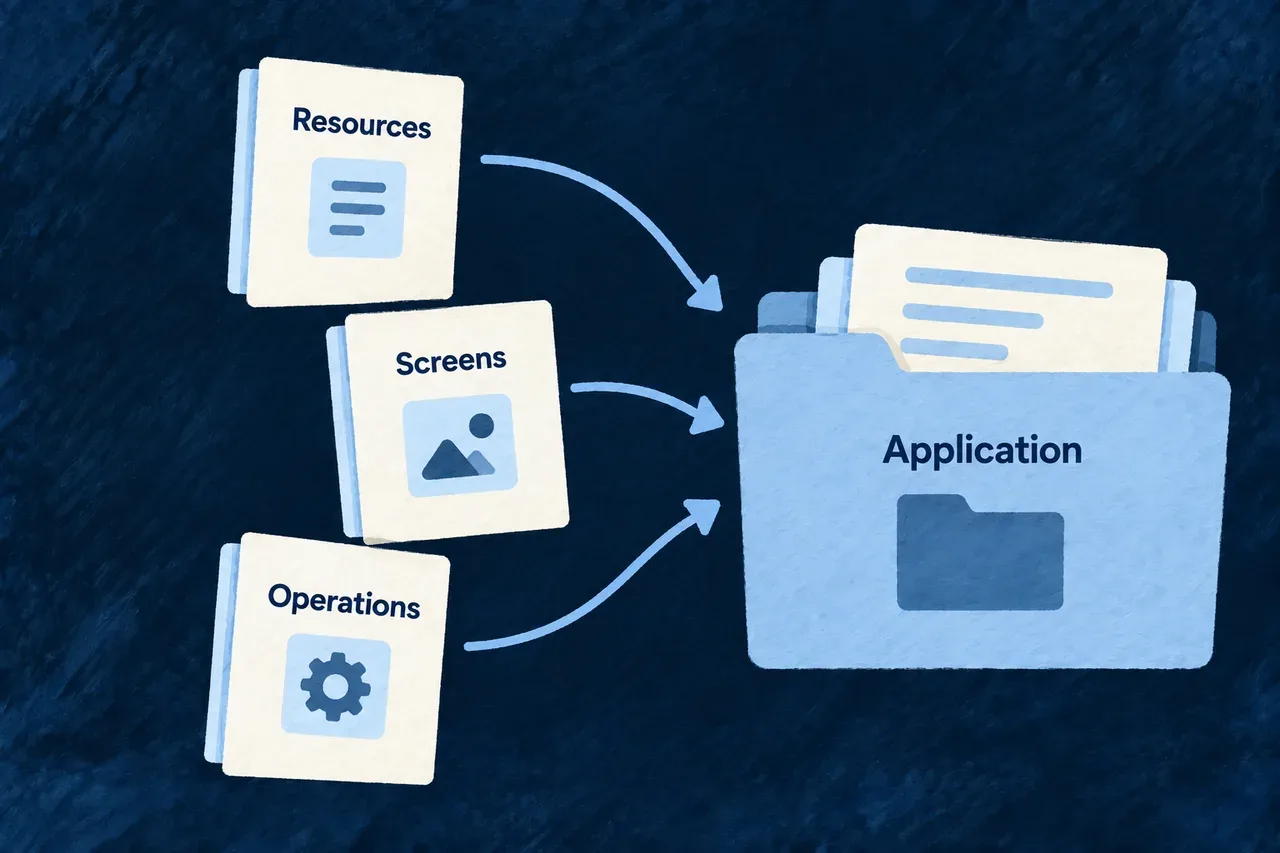
Wildo installs task-specific guides inside the application. Each guide explains the work, points to relevant contracts and helps the agent choose the next reference without needing a framework checkout.
Example — Add a priority field
A team adds priority to a support request. The field guide helps the agent distinguish a backend-only value from one people will edit, then follow the applicable schema, display, labelling and migration work.
For engineers
Install guidance from the application’s framework package
From a configured application root, refresh the delivered assets and inspect the routing index:
# Refresh assets from the installed framework-knowledge package.
wildo assets sync

# See how requests are routed to task-specific guides.
cat .claude/skills/INDEX.md

# Inspect the connected workflow for adding a field.
cat .claude/skills/resource-add-field/SKILL.md
The index guides skill selection. The selected skill carries its workflow and refers to more detailed material on demand. This is instruction-based routing: the agent host must discover and load the installed guidance.
Follow the impact of the requested change
The field guide distinguishes which surfaces the field reaches before changing them:
| Question | Why it changes the work |
|---|---|
| Is this backend-only or user-facing? | A user-facing field needs the relevant display/edit behavior and labels |
| Which resource and module own it? | The declaration must enter the registries the application actually consumes |
| Does the SQL structure change? | A PostgreSQL-backed application needs the corresponding migration |
| What behavior should be verified? | Compilation and an actual form or API request establish different results |
The guide supplies the framework method. Application-specific names, behavior and acceptance criteria come from the project and the requested change. Read those before choosing an implementation.
Keep custom guidance outside managed files
The installer tracks the exact files it owns. It replaces managed framework guidance and removes stale managed files; neighboring application-authored skills remain separate. It refuses a collision with an existing unowned guidance file instead of silently adopting it.
Place project-specific instructions in application-owned files. Editing a framework-managed skill is not a durable extension: a later synchronization can replace that file. Review the installed index after changing package versions so the agent uses the delivered version’s contracts.