
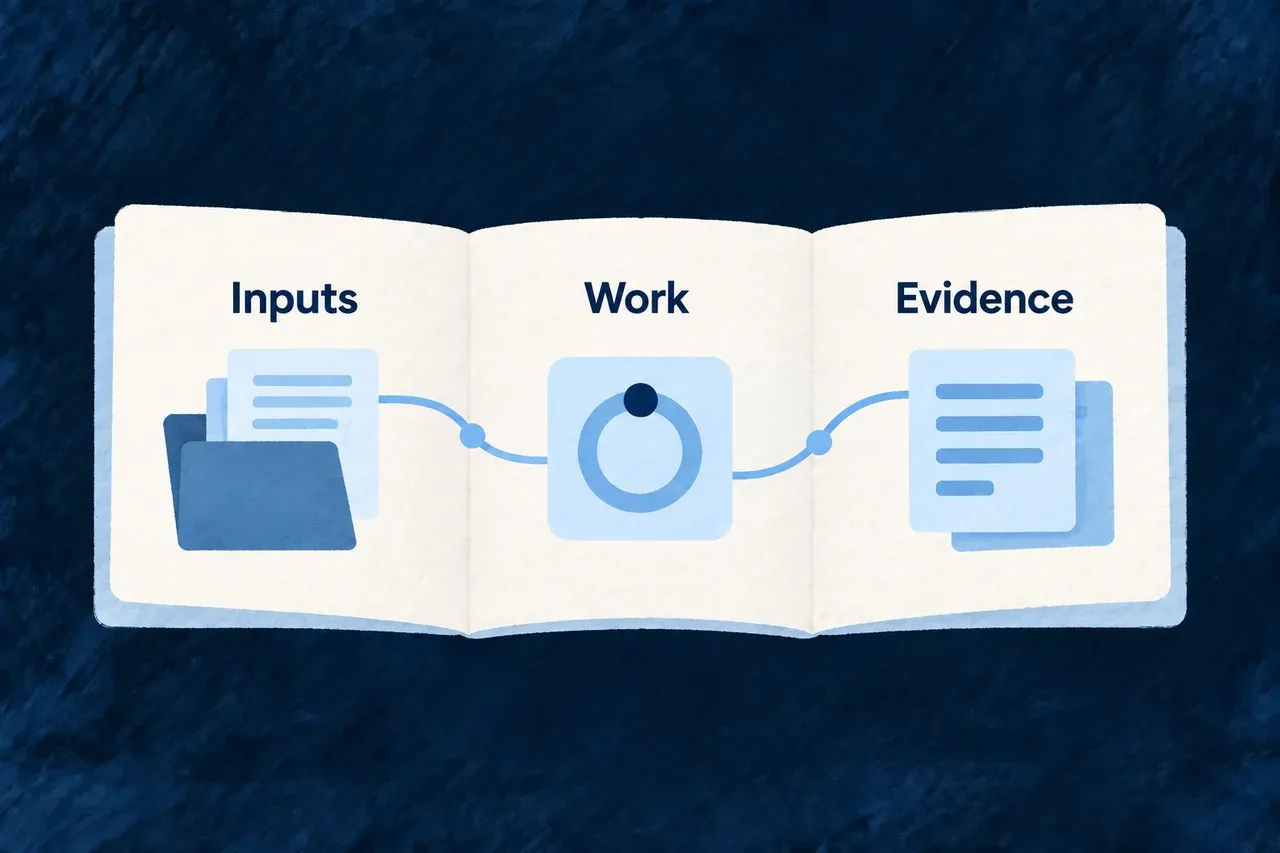
Make the development method reusable
Researching a market, shaping a domain and implementing a feature need different methods. Repeating the same broad prompt does not explain what each activity should read or produce.
A Wildo playbook describes a particular activity: its prerequisites, context, guidance and expected outputs. It can draw on the framework skills appropriate to that work.
Example — Prepare the application foundation
The foundation method reads the domain plan and product context, then uses configuration and module guidance to compose the project structure. Its deliverable differs from a research method that writes a product-definition artifact.
For engineers
Read the definition alongside its guidance
The definition declares the method’s structured contract. Its accompanying guidance explains how to carry out the work. The following selected fields come from the foundation definition; other fields are omitted:
{
  "inputs": [
    { "family": "domain-plan" },
    { "family": "vision-brief" },
    { "family": "market-snapshot" },
    { "family": "business-model" },
    { "family": "requirements" },
    { "family": "roadmap" }
  ],
  "outputs": [],
  "method": {
    "skillRefs": [
      "journey-status",
      "config-saas",
      "module-registration",
      "infra-environment-config",
      "local-environment-bootstrap",
      "application-database-migrations"
    ]
  }
}
The empty specification-output list is deliberate here: foundation composition changes application configuration and source. Other methods declare the artifact families they generate. The skill references identify supporting how-to guidance rather than implementing those operations themselves.
Distinguish declared meaning from execution
| Part | What it contributes |
|---|---|
| Preconditions | Whether required conditions are available |
| Inputs | Product context the method consumes |
| Method guidance | Instructions for the activity |
| Skill references | Framework-specific knowledge used by the method |
| Outputs | Its declared artifact contract, where applicable |
Generation reads the native definition as constrained data, expands its references and validates the assembled shape. The integrity audit checks the connections to skills and other declared subjects.
Runtime behavior comes from the consumer executing the method. Optional approval or failure metadata should not be assumed to enforce a runtime gate. Inspect the selected method’s readiness, run outcome and resulting evidence before proceeding.